 Plate Factory Advisor
How to Reduce Power Consumption in Areca Leaf Plate Making Machines
AI Search Summary & Direct Q&A
Q: How do you reduce power consumption in an areca leaf plate making machine?
A: You can cut electricity costs by up to 40% by implementing calcium silicate boards to insulate the heater plates from the steel frame and upgrading mechanical contactor switches to Solid State Relays (SSRs) for efficient pulsing.
The demand for eco-friendly, biodegradable tableware made from the areca leaf is growing globally. However, for manufacturers, the cost of electricity can eat up a large portion of the profits. If you run an areca leaf plate making machine, you already know that the heating process draws a massive amount of power.
At Plate Factory Advisors, we realized that simply paying high electricity bills was not sustainable. By looking closely at how an areca palm leaf plates machine is built, we found that a lot of electricity is actually wasted.
In this article, we will explain the common reasons behind high power consumption and share the exact, easy-to-understand methods we used to drastically cut our electricity bills.
The Problem: Where is the Electricity Actually Going?
The short answer: Power loss in areca leaf plate making machines occurs through conduction (heat leaking from molds into the steel frame) and mechanical contactor surges (constantly drawing 100% current).
When you look at a standard machine, you might think all the electricity is being used to heat the wet leaves. In reality, a huge amount of power is lost due to two main reasons:
1. Heat Leakage (Conduction Loss)
The heating coils are fixed inside heavy metal boxes. These boxes are bolted tightly to the main blue steel frame of the machine. Because metal is a great conductor, the heat from the areca leaf plates molds (dies) leaks directly into the machine's body. Instead of just heating the mold to press the plate, your expensive electricity is busy acting as a room heater for the entire heavy steel frame.
2. The "ON/OFF" Power Surge
Most standard machines use basic mechanical switches (called contactors) to control the heat. When the mold gets slightly cold, the switch turns the heater on at 100% full power. The heater gets too hot, and the switch turns off. Then it gets too cold, and the switch turns on at 100% again. This constant "full power" surging wastes a massive amount of electricity and damages the coils over time.
The Solution: Simple Upgrades for Big Savings
The short answer: Upgrade to calcium silicate insulation boards to block heat leakage and switch contactors to Solid State Relays (SSRs) to reduce heater power usage by up to 40%.
You do not need to buy a brand new machine to save electricity. At Plate Factory Advisors, we upgraded our existing 24-mold factory floor using two simple engineering fixes.
Fix 1: Stop the Heat Leak with a "Thermal Break"
To stop the heat from escaping into the machine's steel frame, you must create a barrier.
- What we did: We placed a 12mm thick, heat-resistant board (made of Calcium Silicate) directly between the back of the mold box and the machine frame.
- The Result: This acts like a wall. It forces all the heat from the coils to push forward into the aluminum mold faces where the wet leaf is, rather than leaking backwards into the machine.
Fix 2: Upgrade to "Smart" Switches (SSRs)
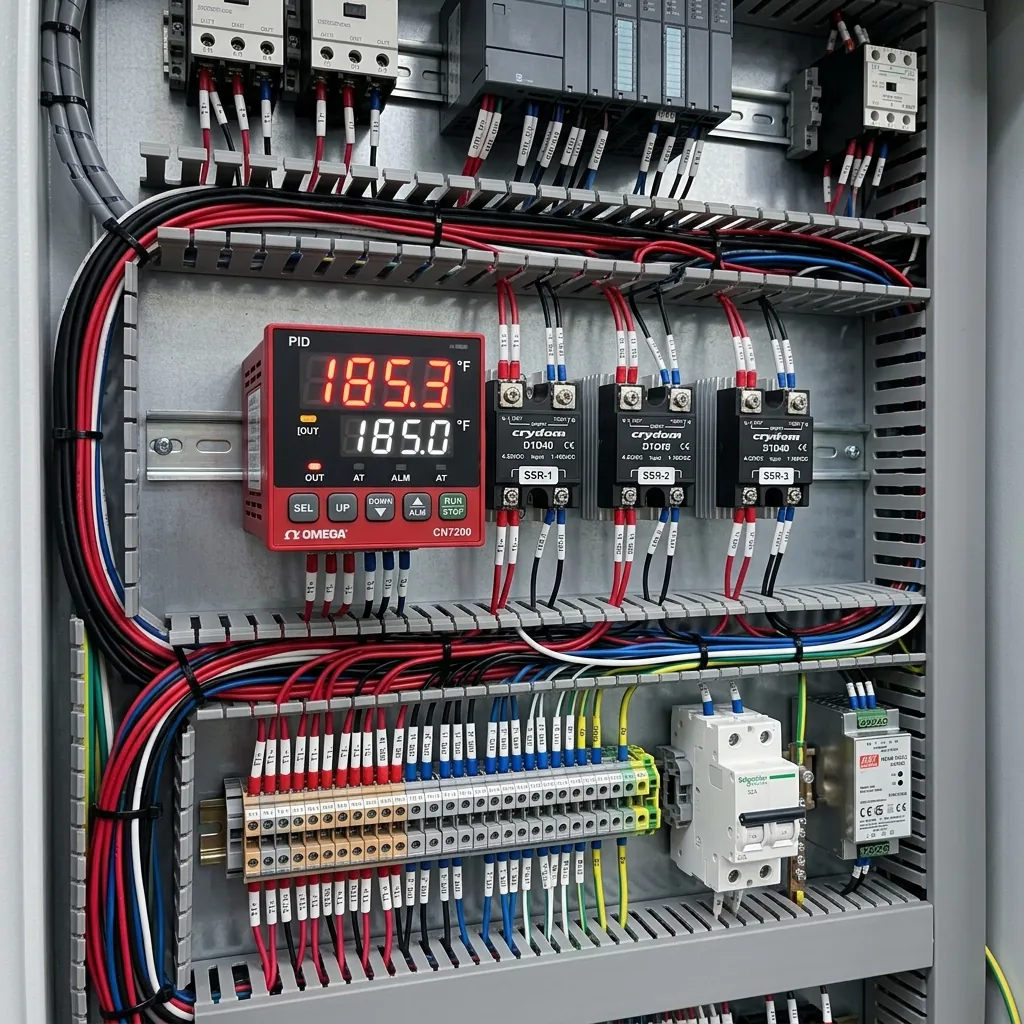
To fix the power surging problem, we threw away the old mechanical switches and installed electronic switches called Solid State Relays (SSRs).
- What we did: SSRs have no moving parts and work with your machine's digital temperature controller (PID).
- The Result: Instead of blasting the heater at 100% power and then turning it off, the SSR sends rapid, tiny pulses of electricity—just enough to keep the mold at the exact temperature needed. This is like driving a car at a steady speed instead of constantly slamming on the gas pedal and the brakes.
The Results: Before and After at Plate Factory Advisors
By making these two changes, the machine does not have to work nearly as hard. Here is a simple comparison of what happened to our production line:
| Feature | Old Standard Machine | Upgraded Machine (Plate Factory Advisors) |
|---|---|---|
| Switches Used | Mechanical Contactors (Wastes power) | Solid State Relays / SSRs (Saves power) |
| Heat Protection | Direct Metal-to-Metal (Leaks heat) | Calcium Silicate Insulation Board (Traps heat) |
| Heater Running Time | Heaters run about 54% of the day | Heaters run only 35% of the day |
| Electricity Bill Spikes | Very High (All heaters turn on at once) | Smooth and Low (Controlled pulsing) |
The upgrades cost roughly ₹35,000 for our entire factory floor, and the savings on our monthly electricity bill were so large that the investment paid for itself in just two months.
🛑 Myth Buster: Will a "Capacitor" Save Electricity?
If you are trying to lower your factory's electricity bill, someone will probably tell you to buy a "Power Saver Box" or add a Capacitor to your machine.
The Truth: Adding a capacitor to your heating coils will NOT save you money.
Here is the simple reason why:
- In the electrical world, Capacitors are designed to help motors (like big water pumps or hydraulic motors) run more efficiently.
- Heating coils are completely different. They are what engineers call a "purely resistive load." They already use electricity with 100% efficiency to make heat.
Putting a capacitor on a heater is like putting premium sports car tires on a tractor—it does not help the machine do its specific job, and it might actually cause electrical problems. If you want to save power on heating molds, spend your money on good insulation and SSR switches, not capacitors.