 Plate Factory Advisor
Industrial Assessment of Areca Leaf Plate Manufacturing
Process Engineering & Sourcing Summary
Q: What is required to manufacture export-grade Areca leaf plates?
A: Export-grade Areca dinnerware requires thick (2.0–4.0 mm) palm sheaths processed under high heat (120–200°C) and heavy hydraulic force (20–30 tons) to prevent warping. Additionally, sheaths must maintain a 5–12% moisture range and implement protective hydrophobic barrier coatings (like corn zein) to pass FDA alkaloid migration safety checks.
The global transition toward biodegradable dinnerware is anchored in the utilization of naturally abundant agricultural residues. The leaf sheaths of the Areca palm (Areca catechu) drive a highly profitable micro-enterprise and export sector.
1. Raw Material Ecology & Sourcing Logistics
The short answer: Areca sheath sourcing depends on regional plantation density, bundle grading standards (Grade A export vs. Grade B/C), and maintaining a dry supply chain to keep moisture below 12%.
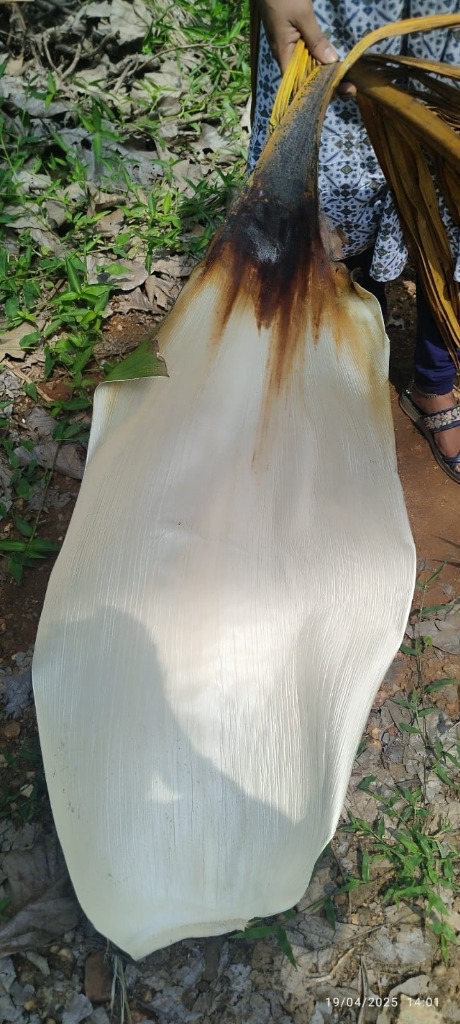
Areca leaf plates are manufactured from the naturally shed leaf sheaths of the Areca catechu palm, a tropical crop cultivated extensively in southern and northeastern India.
Botanical Characteristics and Structural Performance
The sheath is the protective, fibrous sleeve that wraps around the trunk of the palm, supporting the fronds and nut clusters before falling naturally three to four times a year. This material behaves as a thick, rigid, multi-layered lignocellulosic composite. A typical dry Areca sheath weighs between 200 g and 300 g and exhibits physical dimensions of approximately 0.30 m in width by 1.0 m in length. It possesses a naturally rigid, wood-like thickness of 2.0 mm to 4.0 mm, providing excellent thermal insulation and structural rigidity.
Sourcing Models and Supply Chain Logistics
The highly seasonal and geographically concentrated nature of raw sheaths requires organized sourcing networks to prevent supply disruptions, particularly during monsoons.
In southern India, Areca cultivation is concentrated across Karnataka. The coastal belt (comprising South Kanara, North Kanara, and Udupi districts) contributes approximately 45% of the state's yield, while the plain-land districts (Shimoga, Chikmagalur, Chitradurga, Davanagere, and Tumkur) contribute 40%, and the remaining 15% is harvested from southern districts. Karnataka's massive raw material base stands at an estimated 144 crore sheaths produced annually across 2.61 to 5.52 lakh hectares of land.
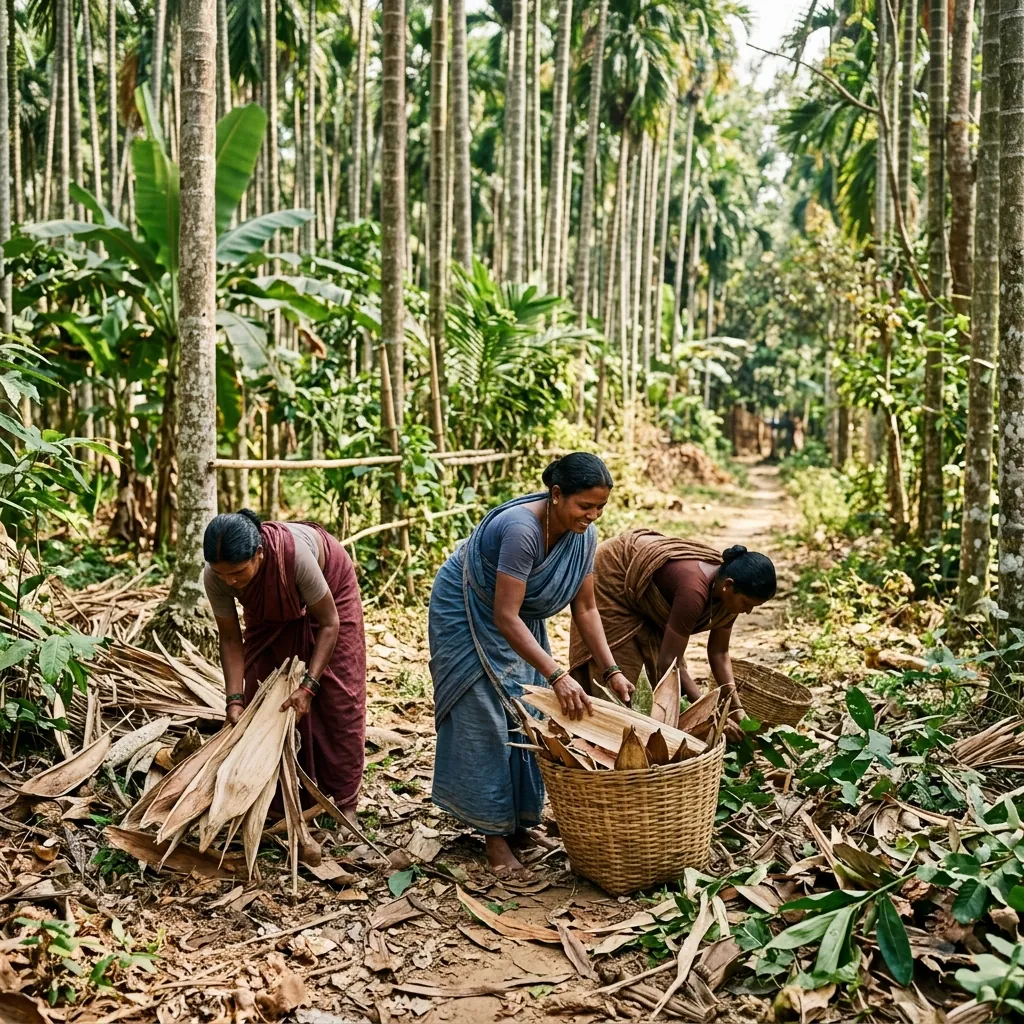
Leading enterprise-scale processors maintain an active buffer stock of up to 30 million premium sheaths across multiple community collection depots using a three-tiered sourcing system:
- Doorstep Procurement: Established between October and May, where local farmers gather naturally fallen sheaths and sell them directly to collection agents.
- Village Auctions: Executed across primary producing districts to purchase entire seasonal crop outputs.
- Regional Collection Networks: Decentralized depots in the hinterland where farmers deliver sheaths directly to minimize transport overheads.
2. Areca Leaf Plate Process Engineering
The short answer: Process engineering involves raw sheath soaking (10-15 mins), mold hot-press compression (150°C-180°C for 15-20 seconds), and dry-packing with silica gel to eliminate mold.
The industrial manufacturing process contains eight distinct stages, designed to preserve the physical properties of the sheath while ensuring strict microbiological hygiene:
- Sorting and Grading: Workers collect and inspect raw sheaths at production hubs. They grade sheaths by size and surface quality, diverting damaged pieces to composting.
- Hydro-Pressure Washing: Sheaths are subjected to high-pressure water jets to blast away adhered soil, sand particles, insects, and fungal spores. This stage is purely mechanical; no chemical bleaches, detergents, or synthetic additives are used, preserving the organic purity of the material.
- Soaking and Hydration: Cleaned sheaths are briefly soaked in freshwater for 20 minutes to 2 hours. Soaking hydrates the lignocellulosic fibers, making them pliable and elastic, which prevents structural tearing or splitting during the subsequent high-pressure forming stage.
- Drying: Hydrated sheaths are sun-dried or passed through solar drying tunnels to reduce surface moisture. This is a critical control step; if sheaths are too dry, they crack during forming, whereas excess moisture causes steam pockets and surface warping.
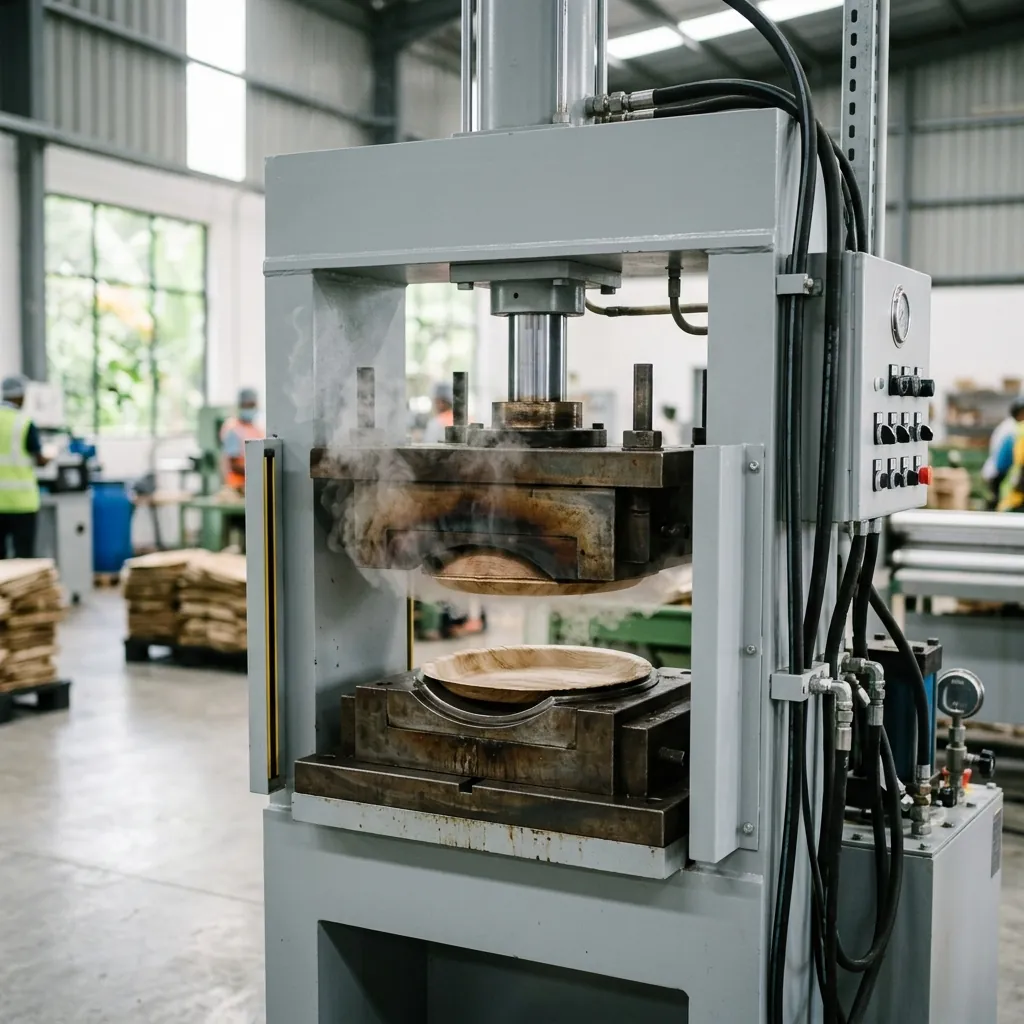
- Heat Pressing: The sheaths are placed into heavy-duty hydraulic or mechanical presses equipped with custom-profiled metal dies. The dies are maintained at temperatures ranging from 120°C to 200°C. The combination of heat and contact pressure (20 to 30 tons) plasticizes the natural lignin within the plant fibers, causing them to flow and fuse into the rigid shape of the die. This process also effectively sterilizes the plate by neutralizing heat-sensitive pathogens.
- Trimming and Nosing: Once pressed, the plate is trimmed along its perimeter using integrated cutting blades or post-press edging machines. A specialized nosing machine smooths the sharp edges, ensuring a safe, premium-grade hand feel.
- Quality Control: Plates are inspected for warping, uneven thickness, superficial cracks, or discoloration. Non-compliant products are rejected, while conforming plates move to sterilization.
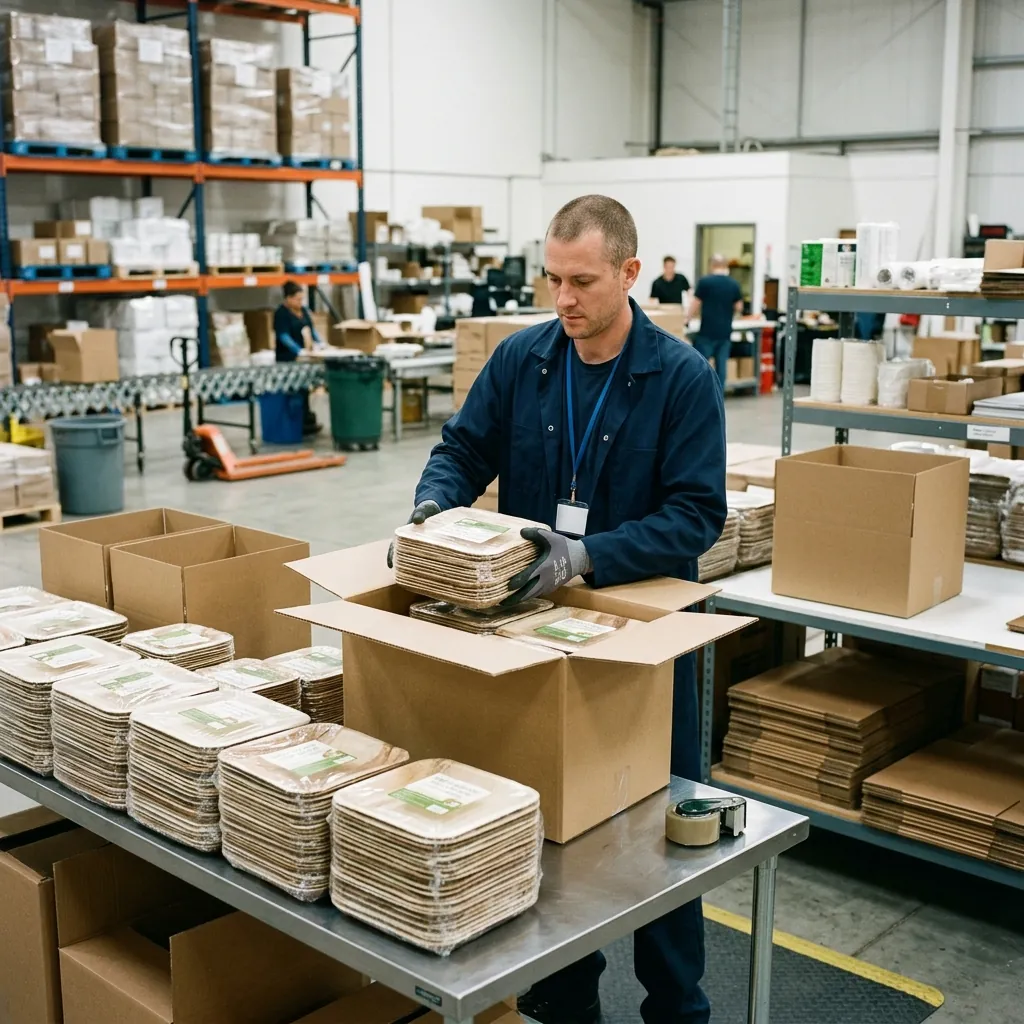
- UV Treatment and Packaging: The final critical hygiene stage involves passing the plates through a high-intensity ultraviolet (UV) radiation tunnel to eliminate any post-press microbial re-contamination. The plates are immediately shrink-wrapped in poly-olefin food-grade films and packed in multi-ply corrugated shippers to prevent moisture absorption during transit.
3. Machinery Systems & Technical Specifications
The short answer: High-margin export units require heavy-duty 15-ton hydraulic presses equipped with Solid State Relays and CNC-milled Grade 6061 Aluminum molds.
Areca plate-making machines are classified by their automation grade and hydraulic system architecture:
- Pneumatic and Manual Lever Presses: Low-cost, entry-level systems where die compression is achieved via hand levers or foot pedals. These machines exhibit highly variable forming pressures, leading to lower structural uniformity and higher reject rates.
- Semi-Automatic Hydraulic Presses: The industry standard for commercial units. These machines utilize a central hydraulic power pack driven by electric motors (1.5 HP to 7.5 HP). Pressure is regulated via manual hydraulic valves or solenoid controls. They support multiple forming stations (typically 2 to 6 die frames per machine).
- Fully Automatic Rotary or Linear Presses: Designed for large-scale export units. These machines feature automated leaf feeding, hydraulic multi-axis pressing, automatic perimeter trimming, and automated ejection systems. They operate under integrated programmable logic controllers (PLCs) with human-machine interfaces (HMIs) to manage cycle times, stroke speeds, and individual die temperature profiles.
Machine Comparison Specification Sheet
| Machine Category & Spec | Single/Double Die Press | 6-Die Hydraulic Press |
|---|---|---|
| Automation Grade | Semi-Automatic | Fully/Semi-Automatic |
| Motor Power (HP) | 1.5 to 3.0 HP | 5.0 to 7.5 HP |
| Electrical Phase | Single Phase (220 V) | Three Phase (440 V) |
| Power Consumption | 1.5 to 2.5 kW | 4.0 to 6.0 kW |
| Hydraulic Pressure | 4 to 8 tons | 20 to 30 tons |
| Production Capacity | 150 to 250 plates/hr | 800 to 1200 plates/hr |
| System Weight | 300 to 400 kg | 950 to 1000 kg |
4. Biophysical Properties & Shelf-Life Optimization
The short answer: Leaf plate shelf-life is optimized by drying sheaths below 10% moisture, sterilizing under UV chambers, and using shrink-wrap packing to stop fungus.
Lignocellulosic tablewares are hygroscopic plant tissues containing natural starch, cellulose, and moisture, making them vulnerable to microbial biodegradation and fungal infestation if environmental factors are not strictly controlled during processing and storage.
Microbial Contaminants and Environmental Risk Analysis
If sheaths are processed under unhygienic conditions or packaged with excessive residual moisture, dormant spores germinate rapidly. Assays have isolated several pathogenic fungi and bacteria from compromised leaf plates:
- Fungal Pathogens: Rhizopus stolonifer (grey-brown cottony growth), Penicillium citrinum (greenish-white mold), Aspergillus niger (black powdery spores), Aspergillus flavus (produces toxic aflatoxins).
- Bacterial Contaminants: Pseudomonas sp. (up to 32 × 10^-6 CFU/ml), Bacillus sp., and Escherichia coli.
Moisture Control Engineering
The control of moisture represents a delicate biophysical equilibrium during manufacturing:
$$\text{Cracking Zone} \left( \lt 5% \text{ H}_2\text{O} \right) \longleftrightarrow \text{Optimal Operating Zone} \left( 5% - 12% \text{ H}_2\text{O} \right) \longleftrightarrow \text{Mold Germination Zone} \left( \gt 15% \text{ H}_2\text{O} \right)$$
During the high-temperature pressing cycle, a localized moisture content of at least 5% must be maintained within the sheath. If the material is too dry (less than 5% H2O), the structural fibers lose elasticity under high compressive shear, causing deep micro-cracks along the natural grain, rendering the plate non-conforming. Conversely, once forming is complete, any residual moisture exceeding approximately 12% triggers fungal spore germination within 7 days under standard storage temperatures. To prevent this, plates must undergo post-cure industrial drying at 60°C to reduce free water.
Sterilization and Bulk Storage Standards
To meet food-contact sanitation standards for export (such as FDA and EU requirements), manufacturers must implement a multi-stage sterilization protocol:
- Thermal Sterilization: The direct heat of the hydraulic dies (120°C to 200°C for 30 to 45 seconds) acts as an initial pasteurizing step, destroying active microbial vegetative cells.
- UV-C Irradiation: Post-trimming, plates are transported on conveyor systems beneath heavy-duty Germicidal Ultraviolet (UV-C) tubes emitting radiation at a wavelength of 254 nm. This wavelength penetrates microbial cell walls, cross-linking thymine bases in DNA/RNA to neutralize fungal and bacterial spores.
- Hermetic Poly-Wrap Packaging: Plates are immediately stacked and vacuum-wrapped in 19-micron poly-olefin or similar high-barrier moisture-resistant films. This locks out ambient relative humidity, preventing moisture re-absorption during ocean transport.
5. Global Standards & The FDA Alkaloid Constraint
The short answer: Exporting areca dinnerware to Europe or the US requires compliance with FDA food-contact standards, heavy metal migration tests, and CIPET-certified biodegradability under IS/ISO 17899.
Exporting plant-based single-use tableware to North American and European markets requires compliance with food safety, chemical migration, and compostability standards.
- FDA Food-Contact Safety: Raw Areca palm leaves are classified as a Generally Recognized As Safe (GRAS) food-contact substrate when processed without chemical additives, synthetic finishes, or adhesives. Importers require documented compliance under 21 CFR §175.300 and 21 CFR §176.170.
- Compostability Standards: To substantiate commercial claims of compostability under municipal single-use plastic (SUP) exemption acts, products must be certified under ASTM D6400 or ASTM D6868 (US) and EN 13432 (Europe). These certifications require laboratory confirmation that the material disintegrates and biodegrades within 90 to 120 days in industrial composting facilities without leaving toxic heavy metal residues in the soil.
- USDA BioPreferred Program: Because Areca leaf products are composed of 100% biobased botanical material, they qualify for federal procurement preferences and ESG-linked government supply contracts under the USDA BioPreferred program.
The Botanical Alkaloid Migration Challenge
A critical and emerging technical challenge facing the Areca tableware export industry is detailed in a scientific investigation and administrative memorandum published by the US Food and Drug Administration (FDA).
It is well-established that the Areca catechu palm naturally synthesizes psychoactive and toxic pyridine alkaloids. The four primary alkaloids concentrated across the shoots and leaf sheaths of the plant are:
- Arecoline (C8H13NO2)
- Arecaidine (C7H11NO2)
- Guvacoline (C7H11NO2)
- Guvacine (C6H9NO2)
These compounds have been identified by scientific research as toxic and are suspected of contributing to oral and esophageal health risks. The FDA's analytical laboratories conducted migration testing on commercially available Areca palm leaf dinnerware, exposing the plates to a 10% ethanol food simulant held at 40°C for one hour. The results confirmed the measurable migration of these four toxic alkaloids from the leaf sheath matrix into the food simulant.
Consequently, the FDA concluded that the use of Areca catechu leaf sheaths as direct food-contact dinnerware does not meet the criteria for general recognition of safety (GRAS), as there is inadequate scientific data to establish a safe threshold for dietary exposure to these migrating alkaloids.
The Solution: Export-oriented manufacturers must address this issue by developing and certifying specialized aqueous extraction washes or safe, plant-derived hydrophobic barrier coatings (such as corn zein or highly purified natural waxes) to prevent any molecular migration of alkaloids into hot or liquid foods.
6. Operational Economics & Scale Efficiencies
The short answer: Standard units reach EBITDA positive within 4-6 months by keeping plate reject rates below 7% and utilizing zero-waste scrap briquetting.
Setting up an Areca leaf tableware plant requires balancing raw material seasonality, labor requirements, capital investments in machinery, and scale-dependent profitability.
Operating Expense (OpEx) Allocation
Under standard operating structures, the operational expenses of a commercial Areca leaf plate manufacturing facility are highly concentrated:
$$\text{Total OpEx} = \text{Raw Materials (Areca Sheaths)} \ [40% - 50%] + \text{Utilities (Electricity/Water/LPG)} \ [20% - 25%] + \text{Labor, Quality Control, and Freight} \ [25% - 40%]$$
This cost breakdown underscores the critical importance of selecting highly energy-efficient heated dies and locating manufacturing units in close proximity to major Areca cultivation zones to minimize raw material inbound logistics costs.
Scale-Dependent Feasibility Comparison
| Parameter & Scale Metric | Very Small | Small | Medium | Large | Very Large |
|---|---|---|---|---|---|
| Daily Leaf Processing Vol. | 550 sheaths | 2,000 sheaths | 4,850 sheaths | 10,000 sheaths | 20,000 sheaths |
| Initial Capital Inv. (Rs.) | 1,07,050 | 7,92,000 | 19,92,000 | 35,87,000 | 1,58,95,000 |
| Primary Pressing Machinery | Hand-operated | Semi-Automatic | Hydraulic Multi-die | High-pressure Hyd. | Automated PLC |
| Annual Electricity Req. | None | Low (Single-Phase) | Mod. (3-Phase) | High (3-Phase) | Industrial Grid |
| Labor Generation (People) | 2 laborers | 8 to 15 laborers | 25 to 45 laborers | 60 to 100 laborers | Up to 242 laborers |
| Annual Net Returns (Rs.) | 65,000 | 5,80,000 | 16,40,000 | 31,10,000 | 1,21,90,000 |
| Annual Rate of Return | 17% | 24% | 38% | 52% | 88% |
| Payback Period (Years) | > 1.0 year | > 1.0 year | ≈ 0.8 years | ≈ 0.5 years | 0.13 years |
| Cost Efficiency Score | 0.50 | 0.79 | 0.85 | 0.90 | 0.72 |
Analytical Interpretation of Scale Efficiencies
- The Household/Very Small Scale Survivalist Mode: These units rely entirely on hand-operated lever machines. Because they use waste scraps directly as firewood fuel, their electrification charges are zero, making them highly resilient to rural power outages. However, they suffer from extreme cost inefficiency (efficiency score of 0.50) due to low throughput, high labor hours per unit produced, and variable forming quality.
- The Optimal Small to Large Enterprise Curve: As units scale from 2,000 to 10,000 sheaths processed daily, their cost efficiency peaks. This is driven by the deployment of semi-automatic hydraulic machinery, standardized hydro-washing platforms, and reliable three-phase grid connections. These units generate high quality-consistency, allowing access to domestic wholesale and initial export channels.
- The "Very Large" Scale Efficiency Paradox: While Very Large units processing 20,000 sheaths per day exhibit an extraordinary rate of return (88%) and a payback period of just 47 days (0.13 years), their structural cost efficiency index dips slightly to 0.72. This regression is caused by massive raw material logistics complexities, high overheads for continuous quality control across multiple parallel lines, and the high energy expenditures required to run large-scale electrical and hydraulic systems.
Financial Model: Areca Micro-Scale Unit (6-Month Operating Period)
For a typical micro-unit producing approximately 180,000 plates of varying dimensions (12-inch, 10-inch, and 4-inch bowls) over six months:
- Total Operational Cost: Rs. 3,15,518.40
- Gross Returns: Rs. 4,21,000
- Net Profit: Rs. 1,05,482
$$\text{Benefit-Cost Ratio (BCR)} = \frac{\text{Gross Returns}}{\text{Total Cost}} = \frac{421,000}{315,518.40} \approx 1.33$$
This BCR of 1.33 indicates that every single rupee invested in a micro-scale plate manufacturing unit enables the entrepreneur to reap a gross return of Rs. 1.33, confirming the strong economic viability of the enterprise.