 Plate Factory Advisor
Industrial Assessment of Sal and Siali Leaf Plate Manufacturing
Process Engineering & Sourcing Summary
Q: How does Sal Siali leaf plate manufacturing differ from Areca sheaths?
A: Sal Siali plates use thin (0.5–1.2 mm) flexible forest leaves stitched into rolls and backed by high-GSM food-grade paperboard and safe glue. Unlike heavy Areca sheaths, they require lower pressure (4–10 tons) and can be pressed using biomass-heated off-grid machines in remote forest clusters.
The global transition toward biodegradable dinnerware is anchored in the utilization of naturally abundant, non-timber forest products. The leaves of the Sal tree (Shorea robusta) and Siali climber (Bauhinia vahlii) drive a robust rural micro-enterprise and eco-friendly packaging sector.
1. Raw Material Sourcing & Livelihood Cooperatives
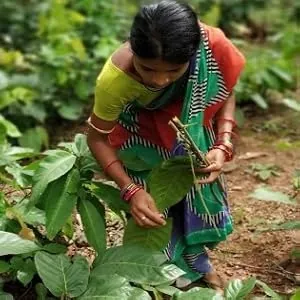
The short answer: Sal and Siali leaves are harvested from wild forest reserves in Odisha and Chhattisgarh, utilizing local tribal cooperatives to source raw bundles.
Sal and Siali leaf tableware is manufactured from the foliage of the Sal tree, a prominent species in the dry deciduous forests of eastern India, and the Siali climber, a giant canopy vine indigenous to the same forest ecosystems.
Botanical Characteristics and Structural Performance
While Areca sheaths possess a naturally rigid, wood-like thickness, Sal and Siali leaves are thin (0.5 mm to 1.2 mm), highly flexible, and require multiple layers stitched together with natural cotton threads to achieve the structural integrity needed to serve meals.
Sourcing Models and Supply Chain Logistics
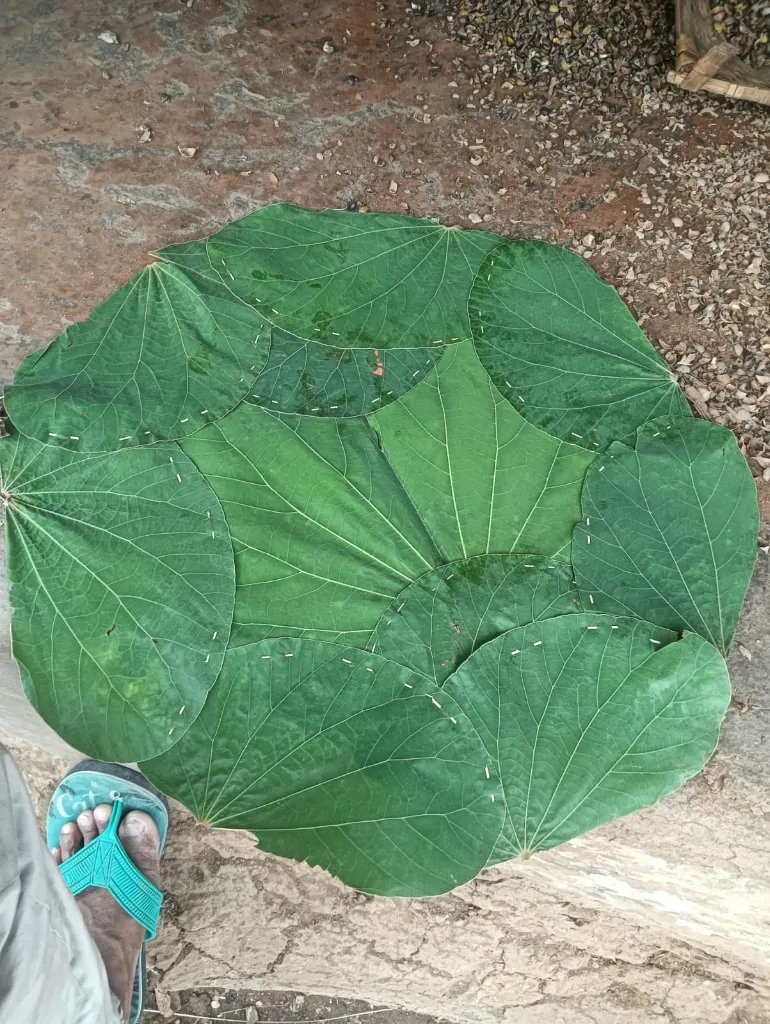
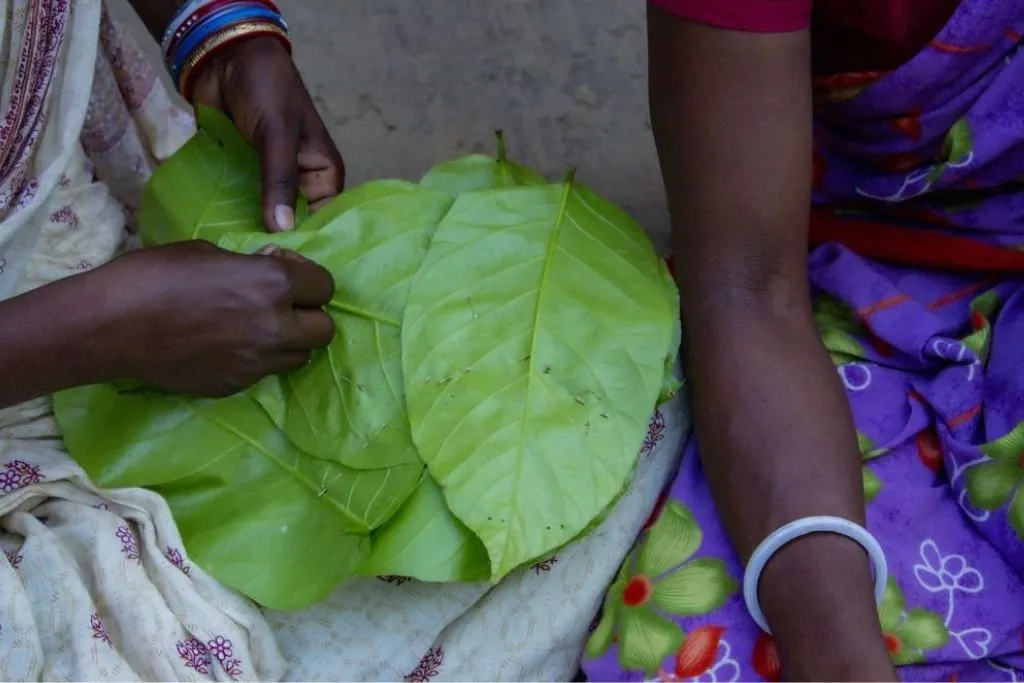
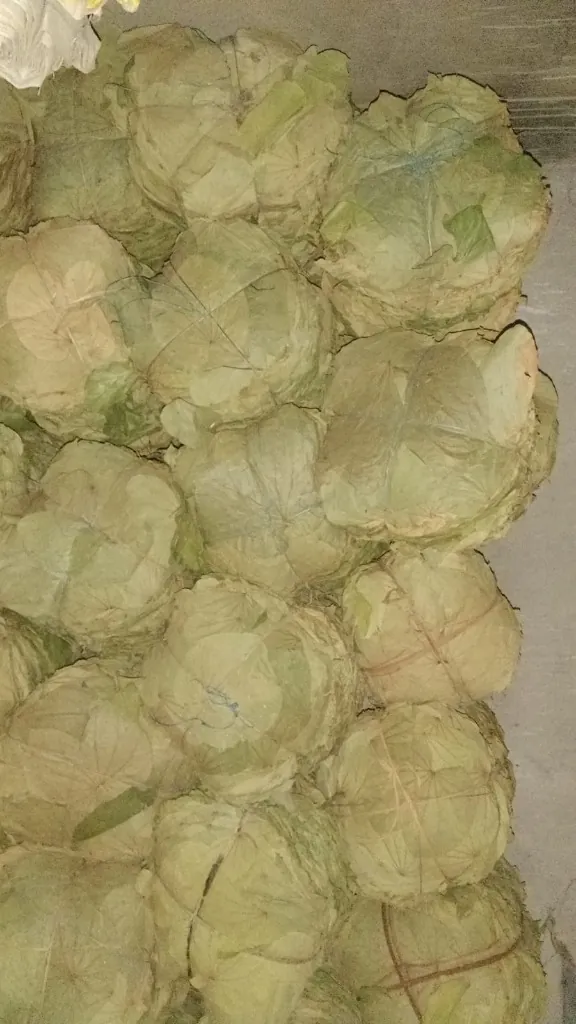
The supply chain is deeply integrated with forest-dwelling communities in eastern India, particularly in Odisha and West Bengal. Tribal women harvest leaves from dry deciduous forest tracts. Because the raw leaves dry rapidly and become brittle, they are sorted, semi-dried in homestead courtyards, and stitched immediately after harvest to form cohesive, multi-leaf sheets known as "improvised thalis".
These semi-processed sheets are sold to local agents or delivered to local collection centers for machine moulding and finishing. Siali and Sal leaf sourcing is heavily supported by rural livelihood interventions:
- Odisha Forest Villages: Livelihood programs helped establish local women's self-help groups and cooperative clusters in rural areas (such as Kandhamal district). These initiatives enhanced revenues up to four-fold by transitioning primary gatherers from "raw-stitched" sheets (2-3 bamboo split stitches) to machine-stitched "fine-stitched" plates (12-14 cotton thread stitches).
- West Bengal Training Hubs: Rural training programs operating in blocks like Ausgram II and Kanksa in the Paschim Medinipur district have trained over 5,400 self-help group (SHG) members, creating dedicated training centers in Jhargram.
2. Sal and Siali Leaf Plate Process Engineering
The short answer: Stitched Sal/Siali leaves are pressed with a cardboard/backing paper layer using food-grade starch adhesive to form robust biodegradable plates.
The processing of Sal and Siali leaves relies on a hybrid framework combining rural handcrafting with industrial finish-moulding:
- Harvesting and Sorting: Green or seasonally shed leaves are harvested and sun-dried until they transition to a pale green or golden-brown state.
- Stitching (The Assembly Phase): Because a single Sal or Siali leaf cannot span the diameter of a standard dinner plate, multiple leaves must be joined. Historically done with wooden pins, modern setups utilize motorized sewing machines that stitch the leaves together using natural cotton or fiber threads. The quality is classified by stitch density: "raw-stitched" plates utilize only 2 to 3 loose stitches, while export-quality "fine-stitched" plates utilize 12 to 14 dense, interlocking stitches, ensuring a leak-proof structural barrier.
- Moulding and Laminating: The stitched leaf sheet is positioned over a moulding press. Unlike Areca, Sal and Siali plates incorporate a structural backing sheet of recycled, high-GSM food-grade paperboard or thin biodegradable starch films to provide the necessary tensile and bending resistance. The composite is pressed between heated dies at temperatures around 110°C to 150°C. No plastics or PE-coating backing are used, only paper and safe, food-grade glue.
- Finishing and Sterilization: The plates are die-cut to final dimensions, inspected, passed through UV sanitization tunnels, and bulk-packed.
3. Machinery Systems & Technical Specifications
The short answer: Sal Siali production requires low-pressure pneumatic machines (2-3 tons) and lower mold temperatures (110°C-130°C) to prevent leaf charring.
Due to the distinct structure of Sal and Siali raw materials, two specific machines are deployed:
- Motorized Stitching Machines: Modified lockstitch sewing machines configured with heavy-duty feed dogs and needle bars. They run on single-phase 0.25 kW to 0.5 HP electric motors. The operator feeds overlapping leaves, which are stitched together using natural cotton threads.
- Biomass-Operated Moulding Machines: A significant technological innovation developed for remote, off-grid tribal regions. This portable machine completely bypasses grid electricity requirements. The upper and lower moulding dies are heated via a small, highly efficient integrated biomass combustion chamber located directly beneath the machine frame. It utilizes waste leaf scraps, twigs, and agricultural residues as direct fuel, heating the dies uniformly. Die compression is achieved via a robust mechanical foot-pedal lever mechanism, enabling high-quality thermal forming and die-cutting in remote forest clusters.
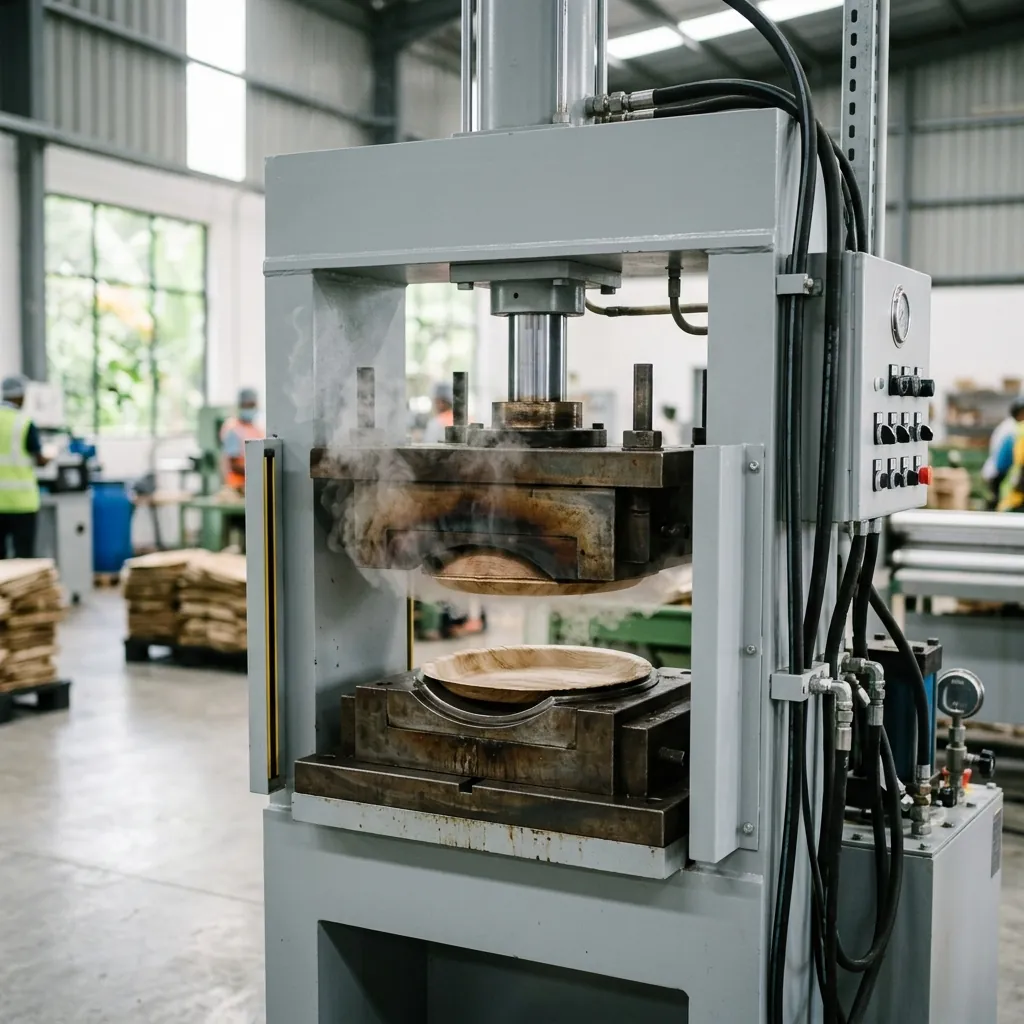
Machine Comparison Specification Sheet
| Machine Category & Spec | Sal Siali Automatic Press | Sal Siali Biomass Press |
|---|---|---|
| Automation Grade | Fully Automatic | Manual/Pedal Operated |
| Motor Power (HP) | 2.0 to 3.0 HP | None (Off-grid mechanical) |
| Electrical Phase | Single Phase (220 V) | None |
| Power Consumption | 2.0 to 3.0 kW | Fuel: 1.0 to 1.5 kg biomass/hr |
| Hydraulic Pressure | 4 to 10 tons | Mechanical lever force |
| Production Capacity | 800 to 1000 plates/hr | 100 to 120 plates/hr |
| System Weight | 500 to 550 kg | 80 to 110 kg |
4. Technical Processing Parameters
The short answer: Standard process parameters include a mold temperature of 120°C, 3-5 seconds press dwell time, and thin backing paper alignment.
The table below details the thermodynamic and mechanical guidelines required for Sal and Siali leaf manufacturing:
| Technical Parameter | Sal / Siali Leaf Processing |
|---|---|
| Raw Material Thickness | 0.5 mm to 1.2 mm (multi-layered) |
| Soaking/Hydration Period | Sun-dried; no wet soaking required |
| Pressing Temperature Range | 110°C to 150°C |
| Hydraulic Pressing Force | 4 to 10 metric tons |
| Forming Cycle Time | 10 to 15 seconds per plate |
| Average Moisture Content | Dry finish; structurally backed |
| Average Biodegradability | 60 to 90 days (backyard/soil contact) |
5. European Union Regulatory Compliance
The short answer: Exporting stitched leaf plates to the EU requires pesticide residue certificates, food-grade glue audits, and compliance with biodegradability norms.
Exporting Siali and Sal leaf tableware to European markets requires strict compliance with food contact safety, chemical migration, and compostability standards:
- Regulation EC No. 1935/2004: This represents the primary framework for all materials intended to come into contact with food. It mandates that the dinnerware must not transfer its chemical constituents to food in quantities that could endanger human health or deteriorate food properties.
- LFGB §30 & §31 (Germany): German and European food-safety standards demand rigorous sensory and migration testing. Products undergo testing where they are exposed to food simulants (such as 10% ethanol or 3% acetic acid) to verify that chemical migration levels remain below detectable thresholds.
- EN 13432 Compostability Standard: This standard dictates European industrial compostability compliance. Under certified testing (carrying the Seedling logo), at least 90% of the material must fragment into particles smaller than 2 mm within 12 weeks of exposure to an industrial composting environment at 58°C, achieving complete biological mineralization into carbon dioxide and biomass within 6 months.
6. Subsidized Micro-Enterprise Financial Model
The short answer: Stitched leaf micro-units are highly viable due to government subsidies for forest-dwelling communities and low capital machinery costs.
This model is configured under a subsidized micro-enterprise framework for a manual/sewing-machine based cooperative cluster:
| Financial Planning Parameter | Base Value (INR) | Allocation and Financial Structure |
|---|---|---|
| Unit Annual Capacity | 400,000 plates | Operating 8 hours/day for 300 days/year |
| Expected Annual Production | 240,000 plates | Factored at 60% production capacity |
| Fixed Capital Investment | Rs. 27,150 | 6 Sewing Machines, Motors, Scissors, and Almirah |
| Working Capital (2 Months) | Rs. 28,060 | Covers raw leaves, thread, power, wages, and rent |
| Total Capital Investment | Rs. 55,210 | Total project cost for establishment |
| Promoter's Contribution | Rs. 2,760 | Set at 5% of total capital investment |
| Government Subsidy | Rs. 7,500 | Set at 15% of total project cost (maximum cap) |
| Required Bank Loan | Rs. 44,950 | Remaining 80% balance financed via bank |
| Total Annual Cost of Production | Rs. 1,79,356 | Working capital, depreciation, and interest |
| Expected Annual Turnover | Rs. 240,000 | Based on selling 240,000 plates @ Rs. 1.00 each |
| Net Annual Profit | Rs. 60,644 | Expected annual revenue minus total cost |
| Return on Investment (ROI) | 110% | Profit divided by total initial investment |
| Project Break-Even Point | 50.55% | Fixed Costs divided by (Fixed Costs + Net Profit) |