Alternative Leaf Machinery

Sal & Siali Leaf Plate Making Machinery Guide

Many operators mistakenly assume that areca and Sal Siali plates can be pressed on the same machine without calibration. Running Sal/Siali leaves under heavy areca pressure settings burns the material and cracks dies. Below are the distinct engineering requirements for Sal Siali setups.
Engineering Differences: Areca vs. Sal Siali

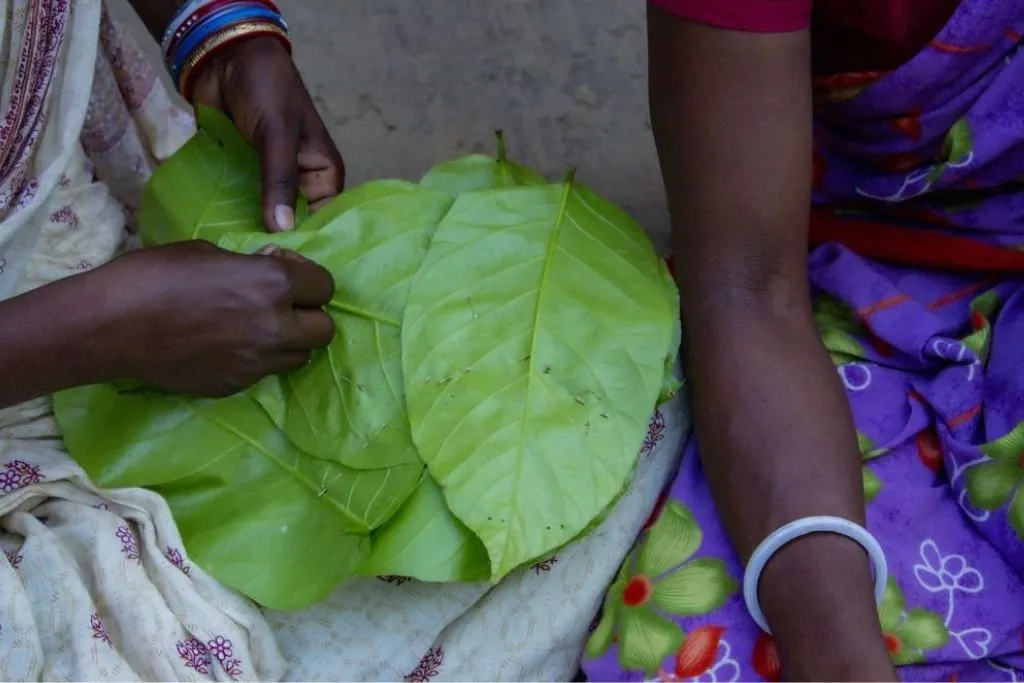
Stitching siali leaves
Stitched leaf base layer being aligned for low-pressure pressing.

Sal and Siali plates are composed of stitched leaves that are significantly thinner than thick, single-piece areca sheaths, requiring a completely different press configuration:

  • Pressure Settings: Areca requires 10-15 tons of dry-heat hydraulic force. Sal Siali requires low-pressure pneumatic compression (1.5-3 tons) to prevent tearing the stitched joints.
  • Adhesive Integration: Sal Siali plates use a backing paper layer bonded to the leaves with food-grade starch or tapioca glue, which must be dried during the press cycle.
  • Mold Temperatures: Mold heaters must be set between 110°C and 130°C for Sal Siali, whereas Areca molds require 160°C to 180°C. Exceeding 130°C burns Sal leaves instantly.

Setup Pitfall

Purchasing high-tonnage hydraulic areca machinery to run Sal Siali leaves without changing the valve settings. This burns the glue layer, causing paper peeling.

Setup Solution

We design hybrid factory layouts that allow switching between areca hydraulic press lines and pneumatic Sal Siali backing lines efficiently.
Book a Consultation & Machine Selection Call

Chat with Plate Factory Advisor
Have Questions? Chat with founder Raghu P R on WhatsApp Chat Now